
Buckingham Township Resident Lookup Paths
A useful person-record check is a set of checks, not a single master roll. The Bucks County tax and assessment tools can show the owner or recipient shown for a parcel, its situs address, mailing field, parcel number, and municipality. A recorded deed adds the named parties and a dated property transaction. Court and estate indexes add a party role, case or file number, and chronology. Pennsylvania voter and vital-record channels have their own access rules. Each result needs to be read for what it actually proves.
For a current parcel question, begin with the Bucks County Tax Information search or the Board of Assessment system, then compare a newer transfer with the Recorder if the display may lag. For a person with no known parcel, a public docket, county marriage or probate trail, public-age archive, or exact state credential may be the better first source. A mailing address is not the same as a property situs, and an owner is not automatically every member of a household.
| Record path | Fact it can confirm | Buckingham source | Access boundary |
|---|---|---|---|
| Assessment or tax parcel | Displayed owner or recipient, situs, parcel, and mailing fields | Tax Information, Board of Assessment, and GIS | Public search; weekly uploads can lag a recording |
| Recorded instrument | Named party, date, document type, and legal-description trail | Bucks Recorder and LANDEX | Name and date index; online research can carry a fee |
| Court docket | Party, caption, docket number, court, dates, and public status | Pennsylvania UJS Case Search | Free docket search, with sealed and limited records excluded |
| Marriage, probate, or public-age vital material | County-issued event or estate connection, subject to date | Register of Wills, Department of Health, or State Archives | Custody, eligibility, and public-age rules differ by record |
| State role record | Exact entity filing or license status | Department of State systems | Role or status is not a home-address confirmation |
Use the record that matches the question. A deed helps with a transfer. A docket helps distinguish people with the same name. A public-age archive can help with family-history dates. None should be stretched into a claim it does not make.
Buckingham Township Court Name Checks
The free Pennsylvania UJS Case Search is the practical court starting point for a Buckingham Township name. Choose Participant Name, enter the last and first names, and set County to Bucks before adding extra limits. The official UJS guidance favors a minimal first search when a docket number is unknown. A middle name, narrow date range, case status, court office, or date of birth can help sort a crowded result set, but an incorrect extra field can hide the match.
| UJS field or result | How it helps a Bucks name check |
|---|---|
| Participant last and first name | Primary route when no docket number is known; compare spelling variants. |
| County and court office | Use Bucks County to separate a local filing from statewide namesakes. |
| Date filed, docket type, category, and status | Useful optional filters after a broad name result appears. |
| Docket Sheet | Shows the public case caption, participant role, court, filing dates, status, and docket events. |
A public docket is not proof of a current address. If a Bucks result matters, record the exact caption, docket number, court, filing date, and party role. Civil document access routes through the Prothonotary and the county E-Filing and Web Viewer; the county states that Web Viewer pages cost $0.10 each plus $1 per cart and that Family Court documents are not online. Criminal-file questions belong with the Clerk of Courts, while estate or Orphans' Court material belongs with the Register of Wills.
Note: Juvenile, sealed, expunged, limited-access, and some retained-or-destroyed docket material may not appear in a public UJS result.
Buckingham Township Resident Name Conflicts
Same-name errors are common when looking up a person. Set down the full name, spelling variants, likely time period, Bucks or adjacent municipality, and the exact fact being tested. Then use at least two independent identifiers. A middle name, court party role, parcel number, legal description, county, date, or docket number can separate people who would otherwise look alike in a bare name result.
Keep the fields from a property result separate. The situs is the physical parcel. The mailing address is where tax correspondence goes. A legal description is the deed's lot, tract, subdivision, or metes-and-bounds language. The parcel number is the county's stable map handle. The Board says its public system is uploaded weekly and warns that ownership information can lag a new recording, so a recent change should be checked with the Recorder or Board rather than assumed final.
Identity check. A recorded owner, a mailing address, a court party, or a voter field does not identify every person who may be connected with a Buckingham Township address.
The Buckingham Township street directory is the appropriate next stop when the question turns from one named person to the address-based parcel trail. It uses the county's address, parcel, map, and Recorder sequence rather than treating a name result as a household roster.
Buckingham Township Vital Record Routes
Vital-record access depends on the event type and year. Pennsylvania's Division of Vital Records holds birth and death certificates from 1906 forward. Under 35 P.S. § 450.801, births become public 105 years after birth and deaths become public 50 years after death. Public-age research moves through the Department of Health genealogy route and Pennsylvania State Archives. Younger records are not a broad public name index, and certified copies remain controlled by the applicable process.
For a Bucks event before 1906, use county Register of Wills and courthouse holdings, State Archives guides, and historical community sources. Bucks lists 1893 through 1906 historic county birth and death records in its archival material. A Bucks marriage record is available only when the license was applied for in Bucks County, not simply because a ceremony occurred nearby. The county's marriage-certificate request form sets out that issuing-county rule and the request fields.
Public-age birth indexes include 1906 through 1913, and public-age death indexes include 1906 through 1968, according to the state genealogy material. State Archives original holdings cited for requests are births from 1906 through 1920 and deaths from 1906 through 1975. If a date is uncertain, first narrow it with an obituary, census, cemetery, or Register index. A multi-year state search has its own form, price, and eligibility conditions, so it should follow, not replace, a carefully dated search.
Note: A certificate's public age and access route depend on its event date, so verify the custodian before sending identification or payment.
Buckingham Township Official Role Records
A state role record can help separate names, but it cannot establish where a person lives. The Pennsylvania Licensing System can confirm license number, status, and discipline through participating boards. Department guidance warns that submitted changes can take up to 48 hours to appear. Preserve the license number, search date, and status, then pair the result with a record created for the fact you need to confirm.
The Department of State Business Record Search is even narrower. It works from a correct entity name or entity number, not an officer name, owner name, business address, federal identifier, or general type. It can return an entity number, exact name, filing and effective dates, type, status, and available filed roles. That makes it useful for confirming an identified organization, not for finding Buckingham Township residents by name.
For a historical family or estate question, a county Register index, recorded instrument, and dated directory or census are stronger ways to establish chronology. State role records remain a separate confirmation layer.
Verify Buckingham Township Resident Records
Verification works best when each step checks a different kind of fact. For example, a person shown on an assessment or tax result can be anchored to the parcel number and situs field, then checked against a recorded instrument or a court, probate, or public-age archive record. Capture what each source displayed and the date it was consulted. If sources disagree, return to the custodian rather than averaging the answers.
- State the exact question and its time frame, such as a recorded parcel owner, a party to a Bucks docket, or a household in a historical census.
- Search the direct official index first and save the spelling, date, parcel, book and page, docket, document type, or party role that appears.
- Check a second independent record with a different proof function, such as Recorder data after a tax result or a Register index after an estate reference.
- Ask the correct custodian about an accessible copy, a counter visit, mail request, or certification only when the record type requires it.
- Stop when a record is masked or protected. An omission does not justify a workaround through restricted data.
- Docket
- A court's running public case record, showing filed events, parties, court, and status rather than a complete personal profile.
- Index and image
- An index points to a record through names, dates, or identifiers; an image or copy is the underlying recorded page, if access is available.
- Certified copy
- A custodian-issued copy with its official certification. It is requested only through the office and rules that govern that record.
Buckingham Township Records Custodian Fallbacks
Online results are only one access channel. The Recorder provides a public research area for instruments and index periods, with microfiche, microfilm, and PDF/A material alongside the fee-associated LANDEX route. The Board of Assessment can explain an ownership-update issue. Court documents route through the filing office, and the Register of Wills offers a genealogical and archival request path for its historic holdings. Libraries and archives can help narrow a date or repository before a formal request.
The Pennsylvania Right-to-Know Law, Act 3 of 2008, is a fallback for eligible agency records, not a way around court policy, vital-record restrictions, or a county certificate procedure. Pennsylvania's Right-to-Know guidance explains how to submit a written request, fees, interim responses, and appeals. Its general response provision is 65 P.S. § 67.901. A narrow request naming the record, date range, and custodian is more useful than a request for a person's whole file.
When the trail is historical, Mercer, Bucks County Free Library, county archives, cemetery material, meeting records, and obituaries can supply a date, village label, or original-repository lead. Those sources help locate the right record; they do not undo access limits on the record itself.
Note: Keep the source name, record identifier, exact wording, and consultation date together so a later check can repeat the same route.
Buckingham Township Resident Locator Limits
State locator tools have narrow purposes. The Pennsylvania DOC locator covers state custody and department-supervised people, not county, federal, or other-state custody. It uses a last name or inmate number, with optional identity and custody filters. Bucks County does not have a verified public live jail-roster search in the research, so county-custody questions go to Bucks County Corrections through its published phone or records channels. A result, or a non-result, should never be treated as a general directory for local people. The official locator screen shows why the system must be kept to its stated scope.
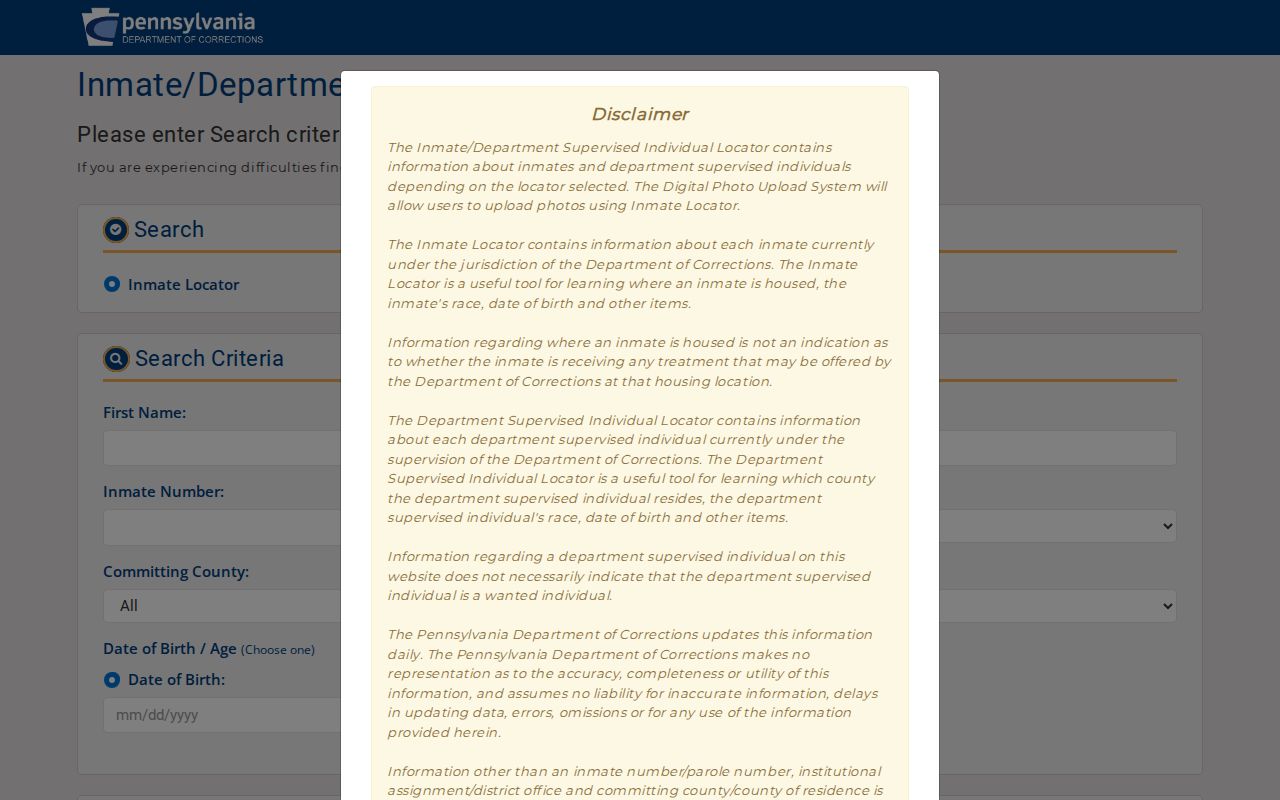
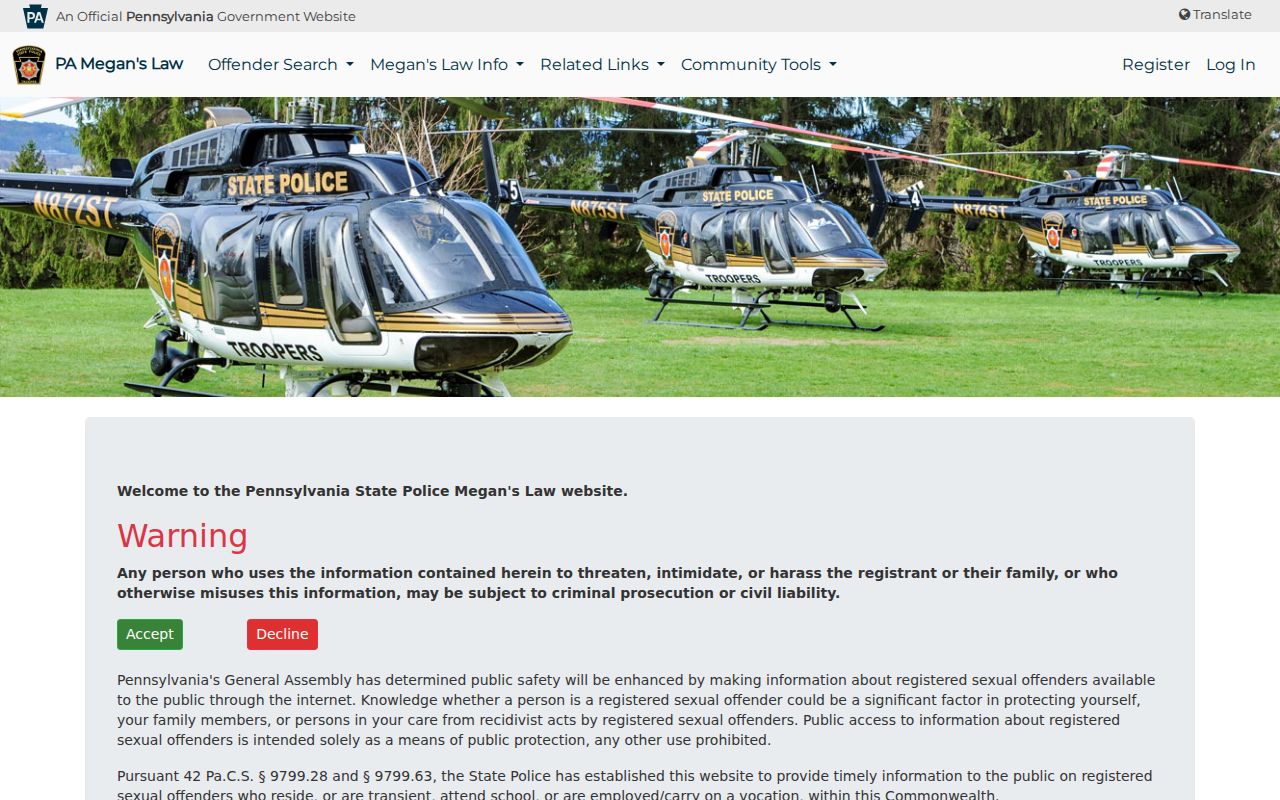
Its state-custody limit prevents a match from becoming a claim about county custody or a present household connection. The Pennsylvania State Police public registry is likewise a public-safety tool, not a complete identification service. Its terms warn against threats, intimidation, and harassment, and say fingerprint comparison is the only positive identification. It has a separate public-safety purpose, so it should not be used to settle a same-name question or build a list of local people.
The registry's own public entry screen makes its limited purpose clear.
For ordinary identity questions, use the record custodian that created the relevant property, court, estate, vital, or state filing record instead.
Buckingham Township Resident Record Boundaries
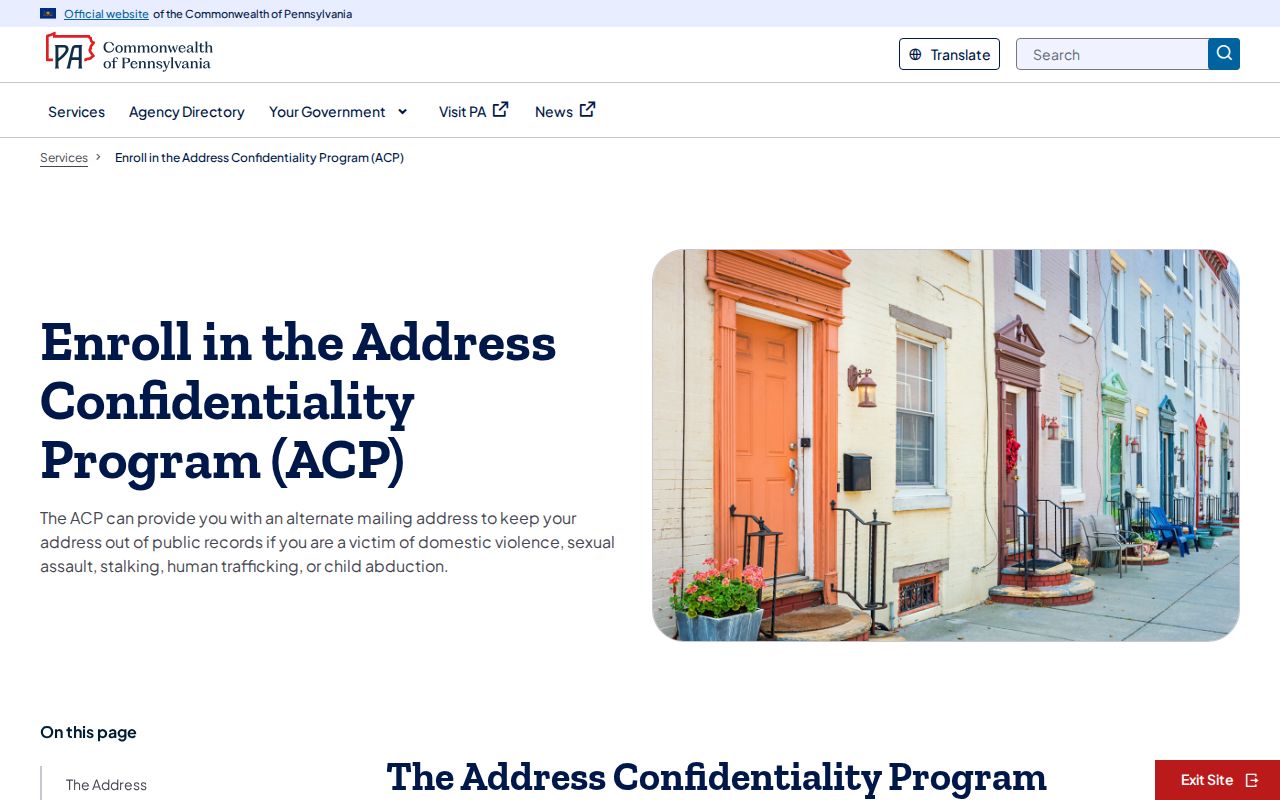
Privacy rules are part of an accurate result. Pennsylvania's Address Confidentiality Program lets qualifying survivors use an alternate mailing address for specified government and civic records. It is a safety program, not witness protection, and it renews on a three-year cycle. A missing ordinary street address can reflect this lawful protection. It must never trigger an effort to infer the protected location from related names, maps, or records.
The program's official enrollment page is the right source for its scope and contact route.
Court policy also protects sensitive identifiers and protected location information, while voter files, vital records, and motor-vehicle data have separate statutory limits. A court clerical error should be addressed through the court custodian's documented process; an assessment lag should be checked with the Board and Recorder. Pennsylvania does not supply a universal public-record deletion promise.
Lawful use. Use Buckingham Township records for lawful personal research, family-history, estate, property, or civic questions. Repeated unwanted contact, harassment, intimidation, or harm can violate Pennsylvania law.