
Buckingham Township City Directory Collections
Buckingham Township is rural and village-based, rather than a city with a single municipal directory run. No authoritative catalog located a serial stand-alone Buckingham Township city directory or a public online reverse or criss-cross series. The defensible collection is a shelf of Bucks County farm, business, post-office, telephone, tax, census, meeting, and obituary material. Search Buckingham together with Lahaska, Holicong, Furlong, Mechanicsville, Wycombe, Doylestown, and other relevant postal labels before treating an index absence as meaningful.
The strongest dated starting points are 1871, 1894, 1902, 1912, and 1914. They are not annual coverage. Each title has its own intended population and data limits. The coverage table below treats them as historical snapshots, then identifies where a reader can inspect a title, ask for a call number, or use a digitized telephone collection.
| Collection | Years | Where held | Access |
|---|---|---|---|
| Business Directory and Gazetteer of Bucks County | 1871 | Bucks County Genealogical Society resource route. | Ask for the identified local or licensed collection. |
| Bucks County Directory | 1894 | BCGS guide and in-library genealogy resources. | Countywide candidate list, not a full count of people. |
| Bucks County Directory | 1902 | FamilySearch or BCGS catalog lead; confirm at Mercer or BCFL. | Selection is limited to adult men and people who owned real estate. |
| Jenkintown-Doylestown telephone directory | October 1912 | Locate or inspect a verified issue or archive copy. | Subscriber and business snapshot only. |
| Farm Journal Farm and Business Directory | 1914 | BCGS holdings identify the volume. | Rural farm and business layer; confirm a holding before use. |
| Doylestown White and Yellow Pages | 1913-1961 in digitized blocks | Library of Congress. | Confirm the relevant village or exchange in each issue. |
Use the Bucks County Free Library genealogy-access information to confirm the library paths for family-history research.
The library access page is a starting point for locating resources. It does not promise that every named title is available online or that every volume includes Buckingham Township.
Buckingham Township Directory, Not a City Series
The words city directory are useful for describing the kind of historical source a researcher seeks, but the local evidence needs a more careful label. The 1871 Hersey title gives names, businesses, and post-office addresses of merchants, manufacturers, professionals, and farmers. The 1894 title is a county citizen list arranged by boroughs and includes post-office and business material. The 1902 volume lists Bucks men over 21 plus men and women who owned real estate, arranged by borough or township, with occupation and post-office address.
Those selection rules mean an entry can be valuable without being a full household record. A name in the 1902 book may connect a person with an occupation and postal locality, while a missing person may simply fall outside the book's stated group. The 1912 telephone issue is a subscriber list. The 1914 Farm Journal title is suited to farm and business research but remains selective. City directories should therefore be paired with nearby records, not treated as a present-day address census.
Buckingham Township Directory Snapshots
The chronology below gives a practical way to choose the closest collection. It also shows why a search needs multiple titles. Bucks County research has strong early depth, but a deep archive is different from a continuous directory publication. Record the title, printed date, locality wording, and its selection rule each time a person is found.
- 1871: S. Hersey's county business directory and gazetteer offers a broad county and post-office snapshot.
- 1894: James D. Scott's Bucks County Directory groups county citizens and includes business and institution material.
- 1902: The county directory applies its adult and real-estate selection rule to township and borough entries.
- 1912 and 1914: A telephone issue and Farm Journal directory add subscriber and rural farm or business pathways.
- 1913-1961: Library of Congress digitized Doylestown telephone blocks may help, after confirming an exchange actually covered the place searched.
Later bibliographic leads exist for 1952 and 1958 Bucks County farm directories, but research did not confirm an authoritative holding, call number, or scanned page. Ask Mercer Museum Research Library or Bucks County Free Library before relying on either title. This is a useful example of how a catalog lead differs from an inspected record.
Buckingham Township Directory Shelves and Scans
Mercer Museum Research Library and Spruance Library are the core special-collection route. The repository describes holdings in Bucks County history and culture, deeds, wills, vital material, newspapers, church records, maps, photographs, manuscripts, and genealogical files, and serves as a depository for county government records from 1683 to 1910. Its staff can provide defined paid research services, source lists, and photocopies, although they will not conduct a chain-of-title search by mail.
Bucks County Free Library's Doylestown branch maintains a Local History collection with many neighborhood-history titles that are accessed by request and may be in-library or noncirculating. Its family-history resources include in-library Ancestry Library Edition, HeritageQuest, FamilySearch account access, and POWER Library material. Request a specific title, village, or county locality. A broad request for a Buckingham city directory may miss a useful county, telephone, or farm title.
The Bucks County Free Library Local History collection describes the local-history shelf and request model.
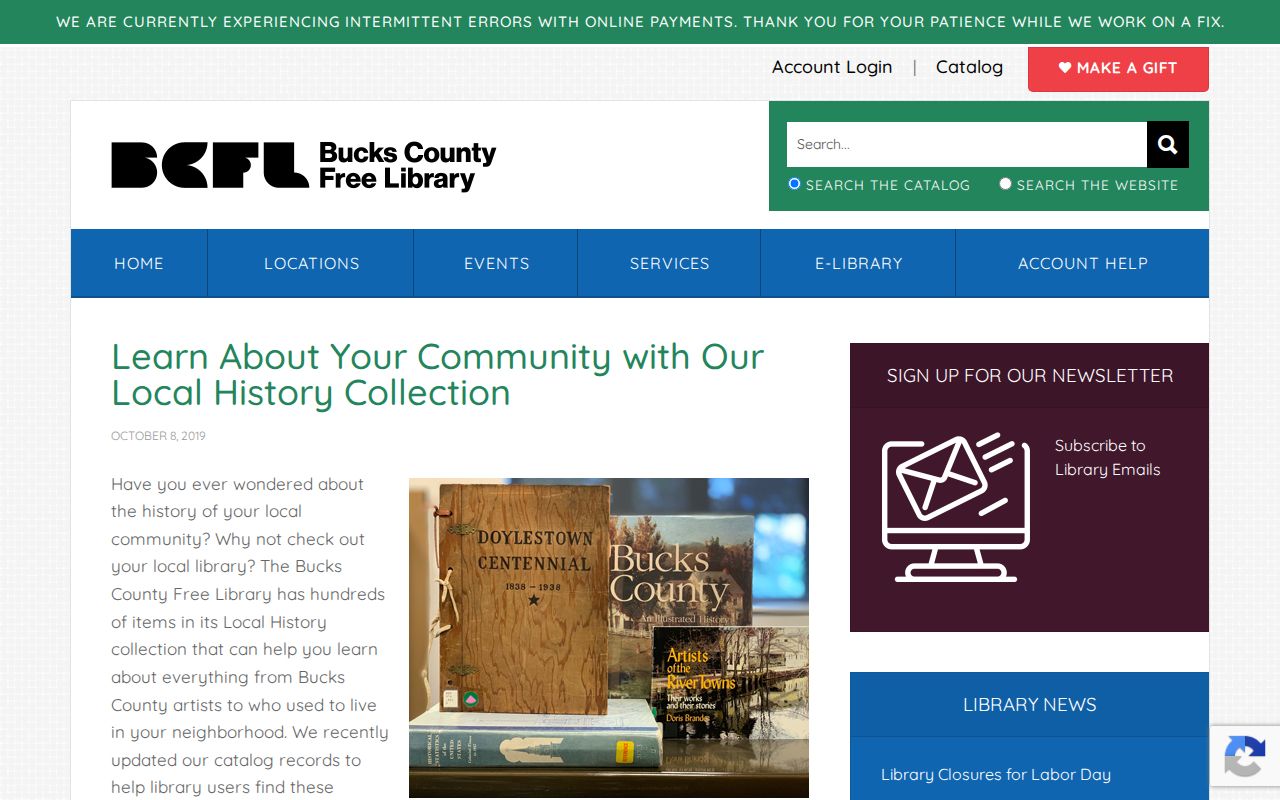
Use the collection as a discovery path for exact titles and local context. A shelf listing is a lead to inspect, not evidence that a name appears in a particular volume.
For an archival alternative, the Bucks County genealogical and historical archives identify naturalization papers from 1802-1906 and term papers from 1733-1920 that can be used by appointment on its readers.
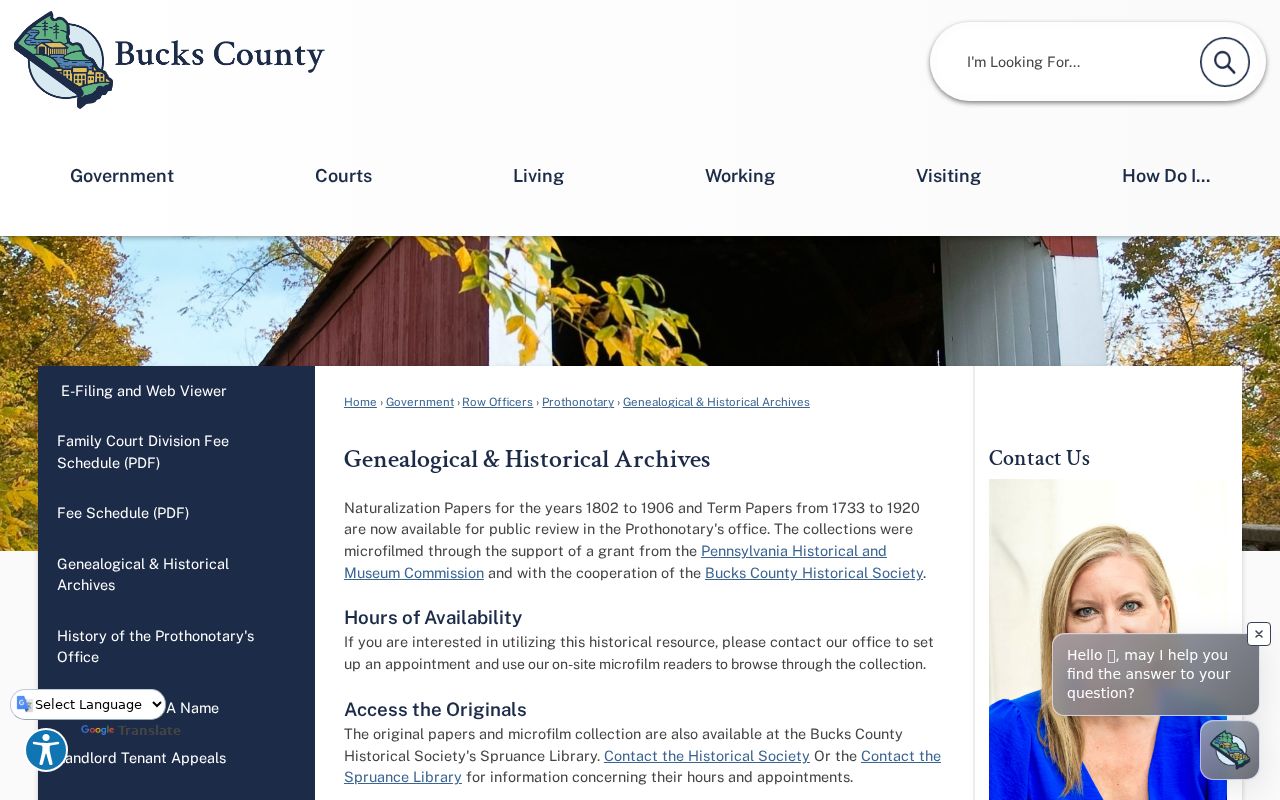
Those county archives help corroborate a family trail that a selective directory only begins. They are not substitutes for inspecting the directory title itself.
Read a Buckingham Township City Directory Entry
No accessible authoritative scan in the research established a Buckingham entry line or abbreviation key, so it would be wrong to reproduce a sample entry or claim a local owner mark. Read each original volume's title page, preface, and key first. For the 1894 title, a conservative inventory is surname and given name, borough or county-voter grouping, post-office address, possible business role, and separate business or organization sections. For the 1902 title, the published limits support name, township or borough grouping, occupation, post-office address, and selection context.
| Name | Preserve the spelling and initials as printed; check variants before declaring a person absent. |
|---|---|
| Locality | Record the township, borough, village, or post-office label exactly as printed. |
| Occupation or business phrase | Use only when the inspected title actually supplies it; do not expand abbreviations without that volume's key. |
| Selection context | Write down whether the title limited inclusion by voting, property, subscription, farm, or business status. |
| Date and title | Cite the issue date and publication title so the same page can be found again. |
- Criss-cross directory
- A directory arranged by address or street rather than surname. No verified public Buckingham Township run was located.
- Householder index
- An index that may organize entries around a named head of a household. Confirm it exists in the actual volume.
- Abbreviation key
- A volume's own explanation of printed shorthand. Photograph or transcribe it before interpreting a line.
A directory entry is a starting point for family research. For the current parcel and street-record route, use the Buckingham Township street directory rather than trying to make a historic title answer a modern property question.
Buckingham Township Meeting Record Trail
Buckingham Monthly Meeting offers a distinctive community trail beyond county directories. The University of Pennsylvania finding aid describes 22 linear feet of records spanning 1694-2023. It lists vital records from 1693-1988, pre-Separation and Hicksite minutes, women's minutes, school records, and Orthodox vital records. Much of the collection is physical or on microfilm, not an all-name online database. For a Friends family, removal, marriage, death, membership, or school material can explain a household connection that a rural directory leaves blank.
Other corroborating paths include Trinity Buckingham's historical and cemetery context, a Mechanicsville Cemetery name inquiry, Mercer obituary retrieval, federal census schedules through 1950, and county tax rolls. Each source has a different date and proof function. A cemetery response can support a burial fact, while a census captures one enumeration date. Combining them with a directory preserves the uncertainty that belongs in family-history work.
Note: Community records can explain a family connection, but neither a meeting archive nor a cemetery inquiry is a complete Buckingham Township resident roll.
Trace Families With Buckingham Township Directories
A careful directory trail begins with a person, a printed locality, and a date. Search surname variants in the 1894 and 1902 county titles under Buckingham and relevant village or post-office labels. Copy the selection limitation before using any name. Look for the 1912 telephone issue only when its exchange covers the locality, then compare the 1914 farm and business material where appropriate. A telephone omission can mean no subscription or a different exchange, not necessarily a move.
- Locate the earliest useful county directory point and save the exact title, year, page, locality, and spelling.
- Compare the printed locality with the closest federal census, using 1900, 1910, or 1920 for the early snapshots and 1950 for later public individual census work.
- Use township-sorted tax rolls, the Board of Assessment, and Recorder records to connect a tract or parcel without assuming a modern street number.
- For a Friends family, check the Monthly Meeting record path. For another family, use church, cemetery, newspaper, or Mercer obituary research as appropriate.
- When a person disappears, record every plausible limit: selection rule, village alias, changed post office, unlisted phone, or missing inspection of the exact volume.
The Bucks County Free Library family-history guide identifies the available database pathways that can support this cross-checking.
The online and in-library tools help locate census, newspaper, and directory references. Inspect the source page before treating a discovery result as proof.
Buckingham Township Records Kept in Doylestown
Historic Buckingham material usually leads to Doylestown rather than a Township courthouse. Doylestown became the Bucks County seat in 1810, and county records moved during the early-1810s courthouse period. Mercer holds many county government records from 1683, while the Recorder retains recorded instruments from 1684 to the present and the Register describes 1684-forward holdings. This layered custody explains why a library shelf, county counter, archive request, and state guide may all be needed for one historical question.
Mercer's special research service has a two-hour minimum of $75 for the first two hours and $40 for each later hour, with a stated turnaround of up to four weeks after request and payment. It also provides a defined obituary route for $10 per obituary. Contact the library for a source list, research scope, and exact title before making a request. The Mercer Museum Research Library service page describes that route.
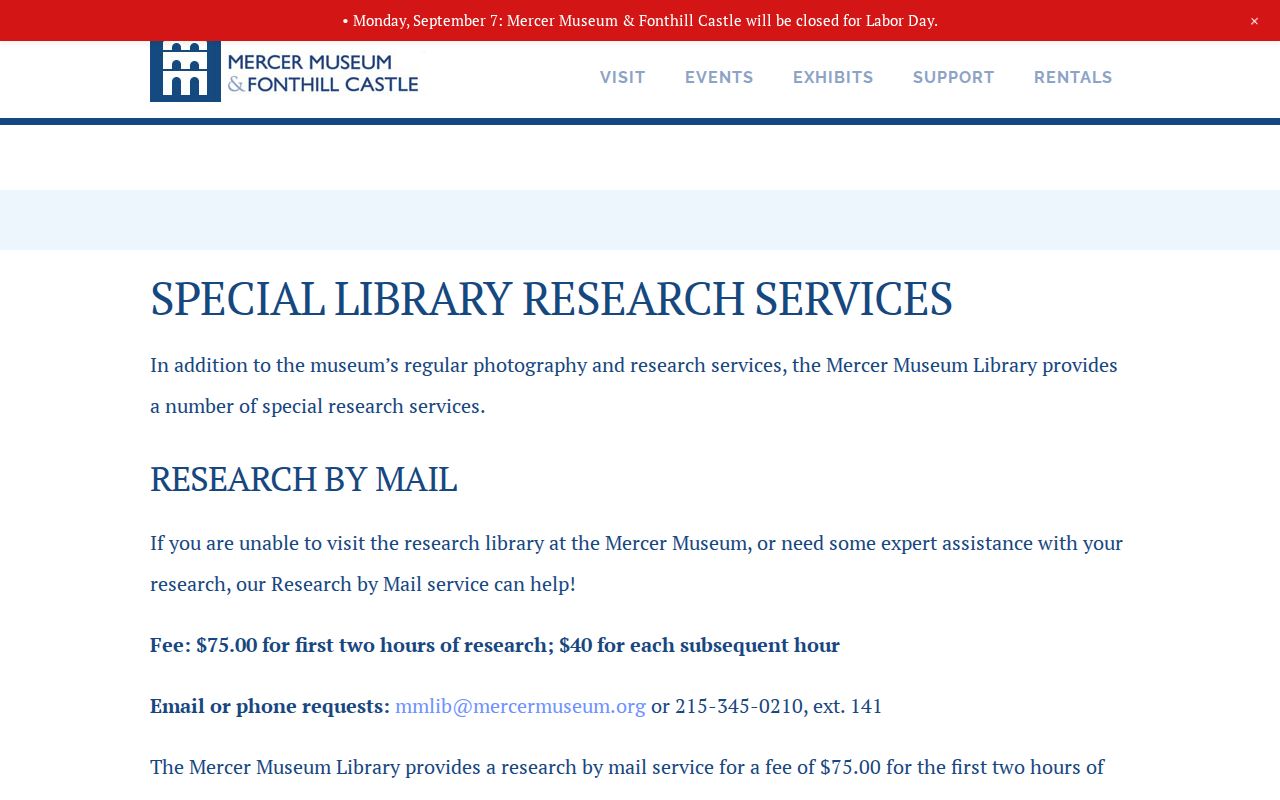
Mercer can provide historical context, directed research, and repository guidance. It does not perform a chain-of-title search by mail, so property-title work remains with the Recorder process.